Winter transforms the natural world, bringing cooler temperatures and a noticeable decline in the buzzing of insects. But have you ever wondered where these tiny creatures disappear to during the colder months? Not all insects make it through the winter. Many die, but many do persist, either as adults, eggs or larvae and to do this they employ ingenious methods to endure the season’s challenges. When winter starts to approach, and temperatures drop, insects numbers seem to decline. Less are seen flying and there are less plants around so there looks to be less food/shelter.
Challenges of Winter

Winter has a particular set of challenges for insects. There is less food available as the lower temperatures and reduced day length mean there is less plant growth. The lower temperatures themselves provide a challenge as insects are ectothermic, meaning they rely on ambient conditions for body heat. Then there is the threat of freezing – insects bodies are composed of large amounts of water, which when frozen can damage the insects body. To deal with these challenges, insects employ a variety of methods.
Migration
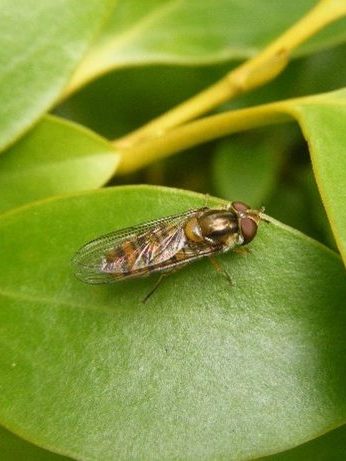
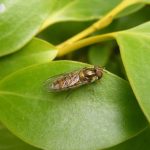
Adult insects migrate to exploit seasonal resources, increase reproductive output, and/or evade habitat deterioration due to temperature changes, variations in food quality or disease risk, or to seek suitable sites to overwinter. In Ireland, we get many insects migrating in the summer from Southern Europe to take advantage of increased resources such as the Angle Shades moth and the Red Admiral Butterfly. The opposite is also the case: many insect species migrate from Ireland to Southern Europe once the temperatures begin to drop here. This happens on a huge scale: a study published by the University of Exeter this year estimated that 17 million insects from 5 orders migrate to Southern Europe each year via the Pass of Bujaruelo in the Pyrenees. Common insects which engage in such migration include the Marmalade Fly and Cabbage White Butterflies.
Diapause
Diapause is an endogenously regulated dormant state that provides a means for insects to survive seasons of adverse environmental conditions and allows populations to synchronize periods of active development and reproduction with seasons of optimal resource availability. Diapause can occur at any stage of development; and examples of embryonic, larval/nymphal, pupal, and adult diapauses have thoroughly been studied and described. However, the capacity for diapause is usually limited to a single, genetically determined developmental stage for each species. For some species, diapause is obligatory, and every individual becomes dormant at the same, genetically determined, stage in the life cycle. For many other species, diapause is a plastic response (i.e. facultative) and constitutes an alternative developmental pathway that is programmed by token signals (e.g. changes in day length, temperature, or food quality) that indicate a season of harsh conditions is coming.
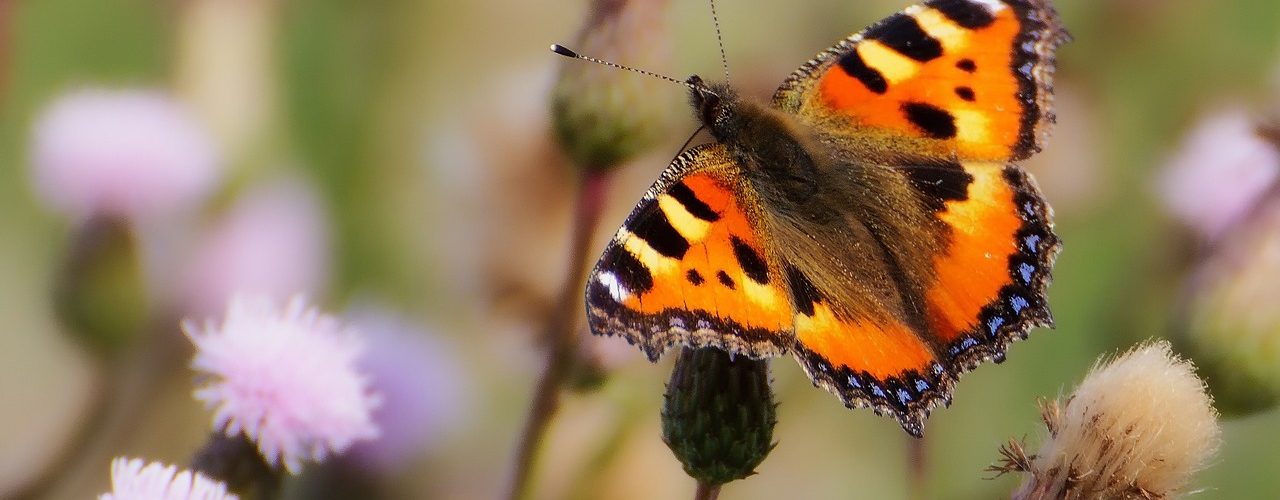
Unlike quiescence, a type of dormancy that is an immediate response to a change in the environment, insects that enter diapause anticipate the decline in environmental conditions and prepare by seeking an appropriate shelter and/or sequestering additional metabolic energy reserves. In addition, while quiescence ends as soon as the environment returns to “normal”, diapause persists until the diapause programme is terminated by endogenously controlled processes that are not completely understood. Some aspects of the diapause phenotype are variable and species specific, but in general, diapause is characterized by developmental arrest and metabolic restructuring that includes downregulation of processes that consume energy (e.g. cell growth and development, transcription, and translation), suppression of oxidative processes that produce energy (e.g. oxidative phosphorylation and glycolysis), and upregulation of processes (e.g. production of cryoprotectants molecules an heat-shock proteins) that enhance stress resistance. Extensive changes in gene expression underlie the biochemical and physiological changes that define the diapause phenotype for each species. Many insects enter diapause, such as the Herald Moth and the Small Tortoiseshell Butterfly, and most midges
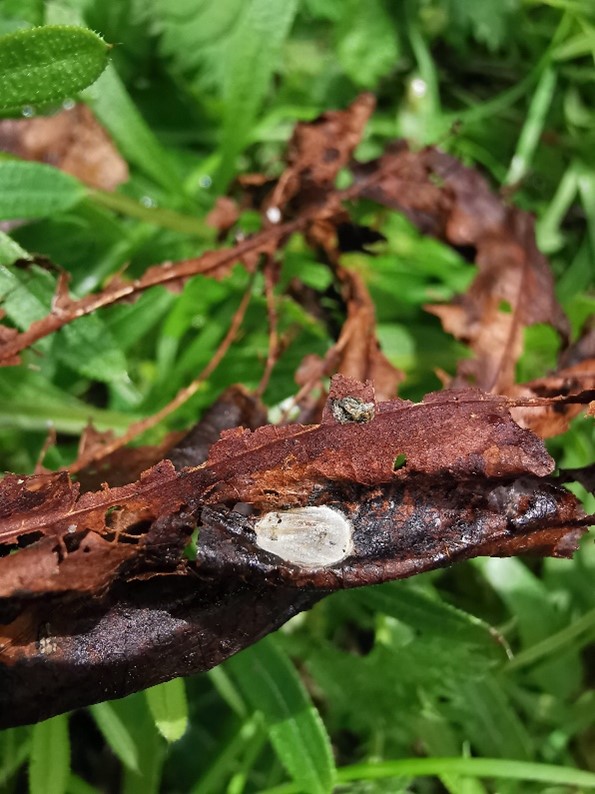
Diapause can be a very successful method of survival for some insects. The Horse Chestnut Leaf Miner (HCLM, Cameraria ohridella) is a small moth whose larvae “mine” the leaves of the Horse Chestnut tree. Originally from the Balkans, it has spread rapidly throughout Europe in the past 30 years. First recorded in Ireland in 2013, it is now almost ubiquitous. HCLM has a number of generations in a year (3 have been recorded in Ireland). When the Horse Chestnut leaves begin to fall, the final generation of the year pupate and enter diapause. The overwinter in mines in the dead leaves to emerge when conditions are favourable. This ensures large numbers of individuals each year. Sites where leaves are removed show less individuals initially, with the populations being supplemented as the year goes by.
Self Made Protection
Insects have developed remarkable biochemical strategies to survive freezing temperatures, relying primarily on either freeze tolerance or freeze avoidance. These approaches enable them to endure harsh winter conditions, each with unique mechanisms and adaptations.
Freeze tolerance is a strategy that allows insects to survive by controlling where ice forms in their bodies. Ice is restricted to extracellular spaces, preventing damage to vital cellular structures. This is achieved through the use of ice nucleators that guide ice formation, along with cryoprotectant molecules such as glycerol, trehalose, and antifreeze proteins. These compounds stabilize cells, limit ice crystal growth, and prevent dehydration. To prepare for winter, freeze-tolerant insects enter a dormant state called diapause, during which they produce cryoprotectants and synthesize ice-nucleating agents. While this method conserves more energy compared to alternatives like supercooling, it carries risks such as dehydration or improper ice formation.
On the other hand, freeze avoidance prevents the formation of ice altogether, allowing insects to endure subzero temperatures by keeping their bodily fluids in a supercooled liquid state. This is achieved by eliminating ice nucleators—particles that promote ice formation—and producing cryoprotectants that lower the freezing point of bodily fluids. Compounds like glycerol and antifreeze proteins are critical in this process, with the latter specifically binding to ice crystals to inhibit their growth. Some insects also employ controlled dehydration to reduce water content, further lowering the risk of freezing. Despite its effectiveness, freeze avoidance requires constant maintenance, leaving insects vulnerable to sudden temperature drops or accidental exposure to ice nucleators.
While freeze avoidance aims to sidestep freezing entirely, freeze tolerance accepts it under controlled conditions. Both strategies reflect insects’ incredible adaptability to extreme environmental challenges, ensuring their survival through even the harshest winters.
Where to Find Overwintering Insects

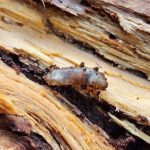
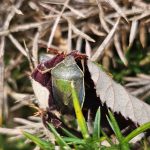
Dragonfly, stonefly and mayfly nymphs, as well as caddisfly larvae are still active in water bodies. Some butterfly and moth species can be found overwintering in buildings. Some plants provide cover for adults, especially native Ivy. Many shieldbug species use gorse as a winter shelter. Larvae of moths and flies, amongst others, can be found inside “dead” plant material such as stems or seed heads. The most common place that insects use to overwinter is the soil. Many insects overwinter in the soil to survive cold conditions by using the soil as an insulating barrier against extreme temperatures and predators. This strategy is commonly combined with physiological adaptations like diapause or freeze tolerance. Soil buffers insects from freezing air temperatures. Depth provides greater protection, with lower layers remaining unfrozen. Insects also overwinter in burrows, leaf litter or under rocks within the soil. These spaces provide stable conditions and reduce moisture loss.
How can I help overwintering insects?
Supporting overwintering insects is essential for maintaining healthy ecosystems. There are a number of steps people can take. Avoid clearing fallen leaves, as they provide shelter for insects like beetles and moth larvae. Leave plant stems, twigs, and dead vegetation as nesting or hiding spots. Avoid mulching all areas, as some insects burrow into soil for protection. Build or buy insect hotels using wood, bamboo, and hollow stems for overwintering species. If you don’t want to make or buy one of those, then piles of logs, branches, or stones to create refuges for insects.
If at all possible, avoid digging and disturbing soil during winter to protect burrowed insects. Delay cutting back plants or raking leaves until spring when insects become active. Avoid using chemicals that can harm overwintering insects. Avoid burning leaves or debris, as insects may be sheltering inside. Grow native flowers, shrubs, and trees to provide food and shelter year-round. Finally, spreading awareness about the importance of overwintering insects helps others see their importance.