Probably the largest source of fungal diversity is soil. However, fungi do not have this all to themselves, and therefore have developed a myriad of relationships with their fellow soil dwellers. One of the most successful of these are the ectomycorrhizal associations that some fungi develop with some plants. Here, plant feeder roots and fungal hyphae intertwine resulting in more efficient nutrient processing, which benefits both parties.
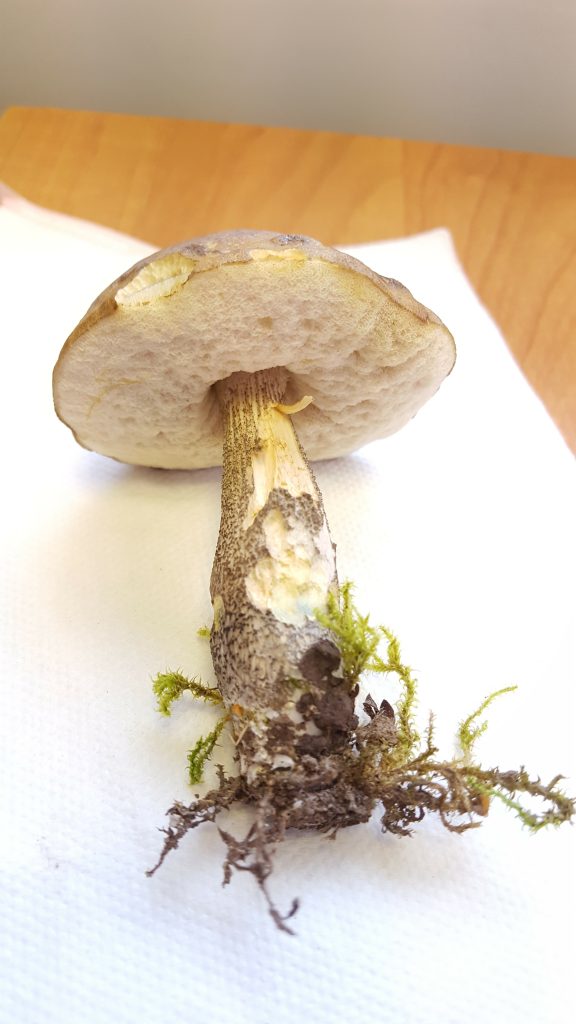
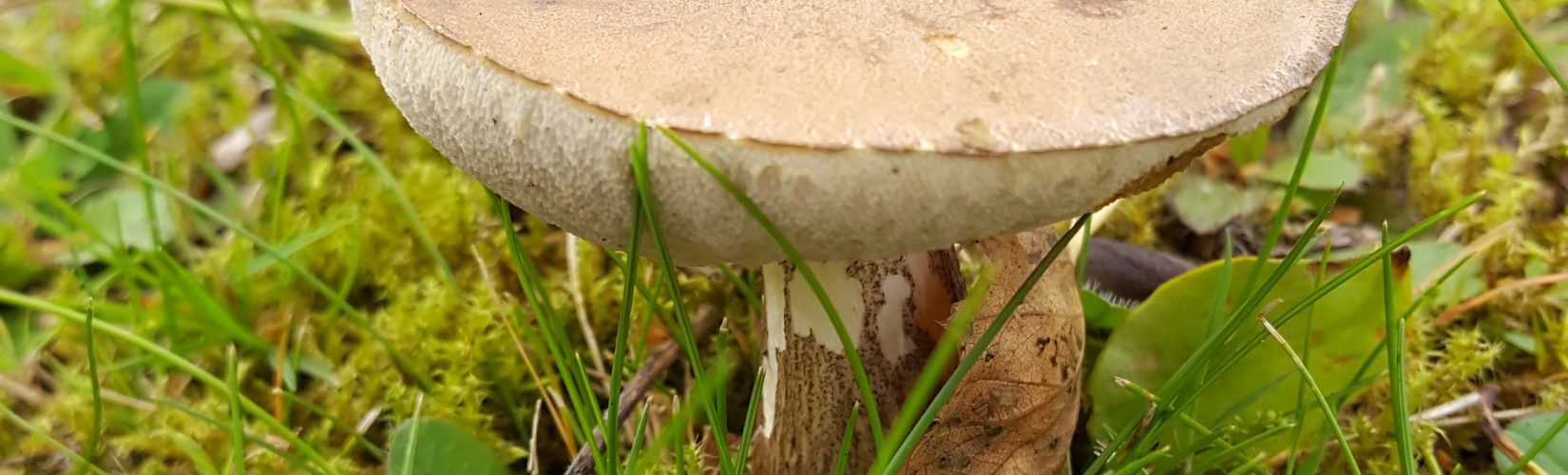
Often, these relationships are specific, such as that of the Birch Bolete (Leccinum scabrum) and Birch trees. The fungus interacts with the tree roots year round, but it is only at this time of year (June to October) that we see any evidence of it growing. This takes the form of the fruiting bodies, the mushrooms which pop up in clusters around Birch roots. The Birch Bolete can be identified by its association with Birch and by the small scales or squamules found on the pale stipe (the mushroom’s stalk). Unlike some other species, the tissue of the Birch Bolete never has a bluish tinge when cut. The flesh is generally pale but can vary to pinkish red.
Many fungal fruiting bodies accumulate heavy metals as they grow, and the Birch Bolete is no different. Very high levels of mercury and lead, amongst others, have been found in samples growing in soils where these metals are present. This shows a possible role for this, and it’s associated Birch, as possible candidates for bioremediation of contaminated areas.
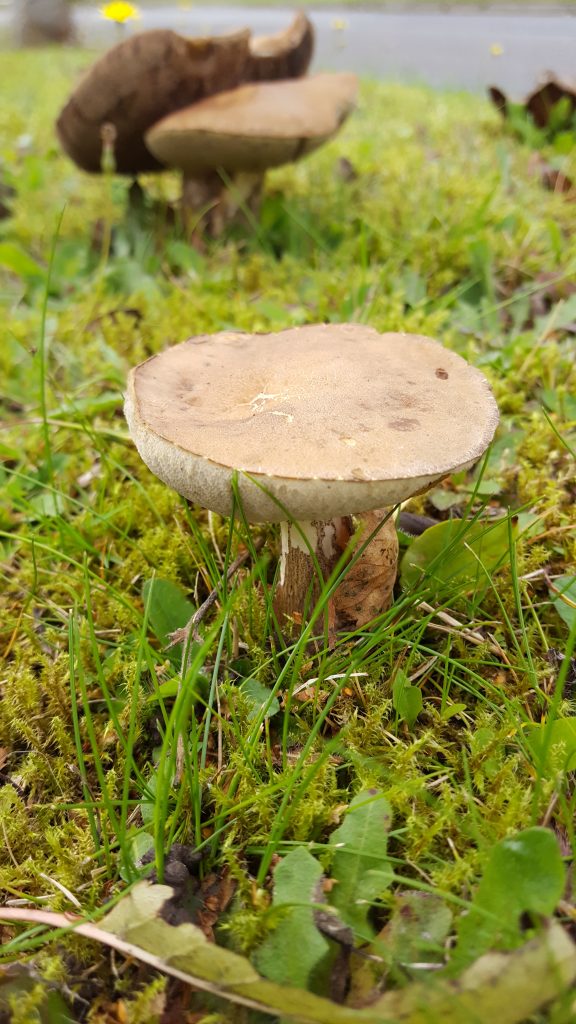
Photo by John O’Sullivan